Everything in this guide
Updated November 15, 2026.
The guide
Ultra-processed food is faster than full
Ultra-processed food goes down faster than fullness can keep up. Eat mostly what a kitchen could make, swap your weekly staples first, and never treat it as a grade.
What makes a food ultra-processed?
One ingredient a home kitchen doesn't keep, like high-fructose corn syrup, whey protein, an emulsifier or a flavoring. Sugar, salt, oil and a factory don't count.
The four groups, and the foods that surprise people
Whole foods, kitchen ingredients, processed and ultra-processed. Whey, fruit yogurt and packaged bread are group 4. Dried pasta and frozen peas are group 1.
Why ultra-processed food makes you eat more
It's soft, dense and quick to eat, so more goes down before fullness catches up. On the NIH ward people ate 508 more calories a day, 17 calories a minute faster.
What the big studies found, and what they can't tell you
People who eat the most ultra-processed food get more heart disease, diabetes and depression. Most of that evidence is low quality, and group 4 mixes very different food.
Processing isn't the same thing as nutrition
The NOVA group says how a food was made. Whole grain bread and yogurt are group 4 and went with less diabetes, so we show nutrition beside it and never a score.
How much is too much?
No US guideline sets a number. US adults get 53% of their calories from ultra-processed food. We use meals.guide's 30% plate line as an everyday mark.
How to eat less of it without cooking all day
Swap the packaged staples you buy every week, one a week, starting with sandwiches, sweet bakery, sweet drinks, snacks and bread. Each swap repeats every time you eat it.
Ultra-processed food rules: what changed in 2025 and 2026
A federal definition is under White House review, unpublished. California is taking the worst out of school meals, and the 2026 guidelines say avoid. Each rule, dated.
How to read a label in ten seconds
Skip the front of the box. Scan the ingredient list for one thing a kitchen doesn't keep, like a syrup, an isolate or a flavor, gum or color, then check fiber and sugar.
Additives: which ones have evidence in people
Few additives have been tested in people. An emulsifier changed gut bacteria in 11 days, sweeteners sit far under FDA limits, and the US guidelines say to limit dyes.
Questions
Are diet drinks ultra-processed?
Yes: sweeteners, colors and flavors. They add almost no calories, and the 2026 US guidelines still say to limit low-calorie sweeteners. Sparkling water is the swap.
Are emulsifiers bad for you?
They keep oil and water mixed. In an 11-day trial in 16 people, the emulsifier CMC changed gut bacteria. A big French study saw small links to heart disease. Early days.
Are frozen vegetables processed?
Plain frozen vegetables are whole food, group 1. Freezing is one of the changes NOVA counts as barely processing at all. Sauced and seasoned bags can be ultra-processed.
Are protein bars ultra-processed?
Almost always: protein isolates, flavors, sweeteners. 93 of 97 US bars we checked had a marker. Use one when it does a job, like a long day with no meal.
Does ultra-processed food cause depression?
Studies link it to more depression, 34% to 49% more in the biggest one, but can't show cause. A diet trial helped. Eat for your mood the way you'd eat for your heart.
Does ultra-processed food cause diabetes?
It goes with more type 2 diabetes, about 12% more risk for each extra 10% of your diet. But whole grain bread, cereal and yogurt, all group 4, went with less.
Does ultra-processed food make you gain weight?
It makes people eat more. On the NIH ward it was 508 calories a day and 2 pounds in two weeks. In England, people lost half as much weight on it over 8 weeks.
Does ultra-processed food matter on a GLP-1?
When you eat less, every bite carries more of your protein and fiber. Keep group 4 foods that do a job, like a protein shake, and drop the ones that only add calories.
Has the FDA defined ultra-processed food?
Not yet. A first proposed definition went to the White House for review on August 10, 2026, and its text is still unpublished. Researchers and the CDC use NOVA.
How can you tell if a food is ultra-processed?
Check the ingredient list for one thing a kitchen doesn't keep: a sugar like dextrose, a protein isolate, a hydrogenated oil, or a flavor, color, gum or sweetener.
How do I eat less ultra-processed food?
Swap the packaged things you buy every week, one a week: the sandwich bread, the cereal, the drink, the snack. Each swap repeats every time you eat it.
How much ultra-processed food do kids eat?
About 62% of their calories, more than adults (CDC, 2021 to 2023), and most at ages 6 to 11. Swap the lunchbox and the breakfast bowl, and skip the food fear.
How much ultra-processed food is too much?
No US guideline sets a number. US adults get 53% of their calories from it. meals.guide's plate line is 30%, and which foods they are counts more than the exact share.
Is bread ultra-processed?
Most packaged sliced bread is, usually from added gluten or an emulsifier. A loaf of flour, water, salt and yeast isn't. Packaged whole wheat still beats white on fiber.
Is carrageenan bad for you?
It's a thickener from red seaweed, in some dairy and plant milks. The FDA allows it. The worries started in mice, and the first trial in people was small and mixed.
Is cheese ultra-processed?
Cheddar, parmesan and most block cheese are processed, group 3: milk, cultures and salt. Wrapped process cheese slices, made with emulsifying salts, are ultra-processed.
Is dark chocolate ultra-processed?
A bar of cocoa, sugar and cocoa butter is processed, group 3. Soy lecithin or a flavoring makes it ultra-processed. Of 97 US bars we checked, 40 had neither.
Is eating less ultra-processed food more expensive?
Often a bit. On the NIH ward, the unprocessed menu's ingredients cost $151 a week against $106. A 2024 USDA menu study found the same direction, and shorter shelf life.
Is Greek yogurt ultra-processed?
Plain Greek yogurt, milk and cultures, is whole food, group 1. Flavored cups with a flavoring, a sweetener or a thickener are ultra-processed. Add your own fruit.
Is oat milk ultra-processed?
About two in three US cartons are: a gum like gellan, a flavoring or an emulsifier. Oats, water, oil and salt alone would be processed. Plain milk is whole food.
Is pasta ultra-processed?
Dried pasta of flour and water is whole food, group 1, the same as plain oats. Frozen pasta meals and instant noodles with flavor packets are ultra-processed.
Is peanut butter ultra-processed?
Peanuts and salt is processed, like salted nuts. A jar that adds fully hydrogenated oil has a NOVA marker, and palm oil doesn't. The jar's label decides, so check yours.
Is plant-based meat ultra-processed?
Most are. In German stores 88% had a marker, often a flavoring. In a US trial they still lowered LDL against red meat. Tofu, beans and tempeh are the whole food version.
Is protein powder ultra-processed?
Yes, even a three-ingredient whey. Whey protein is on NOVA's list by definition, which is about how it's made. A shake that replaces a pastry is still a good trade.
Is sourdough ultra-processed?
Sourdough of flour, water, salt and starter is processed, group 3. A supermarket loaf with added wheat gluten or an emulsifier is ultra-processed. Check the label.
Is ultra-processed food addictive?
For some people it acts like it. About 14% of adults and 12% of kids meet a food addiction scale, mostly for sweets and salty snacks. Speed explains a lot of it.
Is ultra-processed food really that bad?
In three small trials people ate more or lost less on it. Big studies link it to heart disease, diabetes and depression, but most of that evidence rates low quality.
Processed vs ultra-processed food: what's the difference?
Processed is whole food plus a kitchen ingredient, like cheese or canned beans. Ultra-processed adds something a kitchen doesn't keep, like whey or a flavoring.
What are the four NOVA groups?
Whole foods, kitchen ingredients (salt, sugar, oil), processed foods (the two together), and ultra-processed. It sorts food by how it's made and leaves nutrition out.
What does "natural flavors" mean?
Flavor taken from a plant or animal source and concentrated, says the FDA. It's still a flavoring, so NOVA puts the food in group 4, natural or not.
What is maltodextrin?
Starch, usually from corn, broken into short chains of glucose. It turns up in powders, seasonings and sauces, and it's one of NOVA's markers of ultra-processed food.
What is ultra-processed food?
Food with at least one ingredient a home kitchen doesn't keep: a sugar like maltodextrin, a protein isolate, a hydrogenated oil, or a flavoring, color or emulsifier.
What should I eat for breakfast instead of cereal?
Oatmeal, eggs or plain Greek yogurt with fruit, all whole food. Swapping corn flakes for oatmeal adds 4 g of protein and about 3 g of fiber a bowl.
Which foods are ultra-processed?
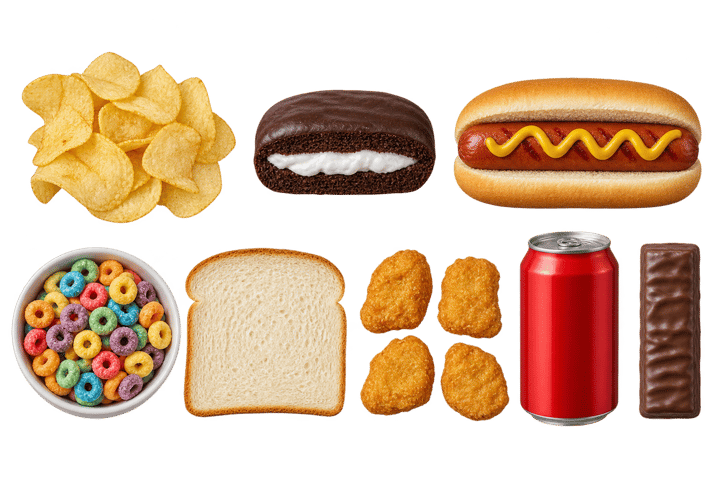
Soda, candy and packaged snacks, and also most packaged bread, fruit yogurt, breakfast cereal, oat milk and protein powder. Frozen vegetables and dried pasta aren't.
Why is ultra-processed food so hard to stop eating?
It's soft, dense and fast. People ate it 17 calories a minute faster on the NIH ward, so more got in before fullness caught up. Harder food slows you down.
Myths
Ultra-processed just means junk food
Packaged bread, fruit yogurt, oat milk with gums and protein powder are all group 4. The test is one ingredient a kitchen doesn't keep, however healthy the food looks.
All processed food is bad for you
Frozen peas, dried pasta, plain yogurt and canned beans are groups 1 and 3. In NOVA, freezing, drying, fermenting and canning don't make food ultra-processed.
If it's ultra-processed, it's unhealthy
In 198,636 US adults, whole grain bread, cereal and yogurt went with lower diabetes risk, and sweet drinks and processed meat with higher. All of them are group 4.
Ultra-processed food only makes you gain weight because of the sugar and fat
On the NIH ward the two menus were matched for sugar, fat, fiber and salt, and people still ate 508 more calories a day on the ultra-processed one, and ate it faster.
Sugar is an ultra-processed food
NOVA puts table sugar with salt and oil, as kitchen ingredients. The sugars that mark group 4 are ones kitchens don't keep, like high-fructose corn syrup and dextrose.
Seed oils are ultra-processed
Every cooking oil is NOVA group 2, olive oil and butter too. Hydrogenated oils are the marker. Whether seed oils are good for you is a separate question, for fats.guide.
Organic or "natural" packaged food isn't ultra-processed
Organic cane sugar isn't a marker, but organic natural flavor is, so the bar is group 4. NOVA asks what's in a food, and how it was farmed doesn't change the answer.
The additives are what make ultra-processed food harmful
One small trial found an emulsifier changed gut bacteria in 11 days. But eating faster and more of soft, dense food explains a lot of what the trials measured.
Eating less ultra-processed food costs a lot more
On the NIH ward the ultra-processed menu's ingredients cost $106 a week and the unprocessed one's $151. Start with frozen, canned and dried staples that keep.
Tools
Is this food ultra-processed?
Pick a food or a whole plate. See its group, the ingredient that decided it, and the swap that drops it most.
Label checker
Paste an ingredient list. The ingredients a kitchen doesn't keep light up in your own text.
One tomato, four groups
Add one thing at a time to a tomato and see the exact ingredient that tips it over.
Your day's share
Your meals and drinks in, your share of ultra-processed calories out, beside the US average.
The swap ladder
Pick a staple you buy every week and climb down to the version with nothing a kitchen would not keep.
Spot the ultra-processed
Ten rounds, two foods. Tap the one that's ultra-processed, then see what decided it.
Your personalized guide
How much of what you eat is ultra-processed: seven taps, your share, where it comes from and your three easiest swaps.
Tracking it in Gyroscope
Take a photo of your meal to estimate calories, macros and micronutrients.
For adults looking at what they eat. It explains how food is made and doesn't grade your food or diagnose anything.