One tomato, four groups
Start with a tomato and add one thing at a time. The group changes as you go, and the label lights up the moment it crosses into ultra-processed.
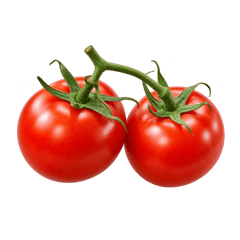
A tomato
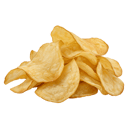
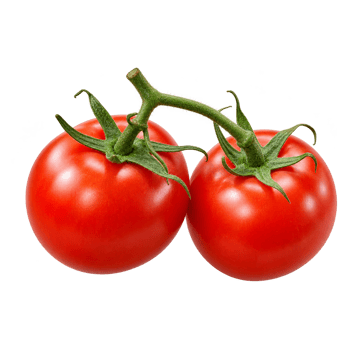
1Whole or barely changedWashed and picked. Nothing added.
The food itself, washed, frozen, dried, pasteurized or fermented. Plain oats, frozen peas, milk, plain yogurt, dried pasta.
Tomato.
An example list for this step, read by the label checker. No markers.
26 cal, 1 g protein, 1.4 g fiber, 0 g added sugar
What it shows
Press through all five steps once. The food crosses into ultra-processed at one step only, the ketchup, and it's one ingredient that does it. That's the whole of NOVA's test. Then take the ketchup or sauce in your own fridge and paste its list into the label checker, since some bottles skip the corn syrup and the flavoring.
What changes at each step
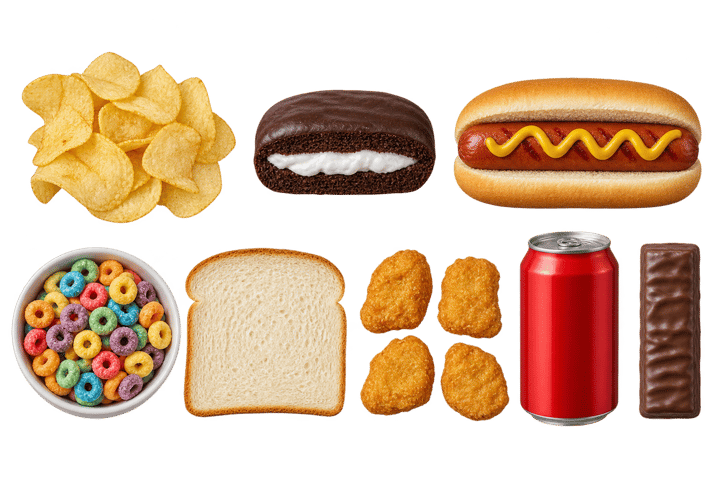
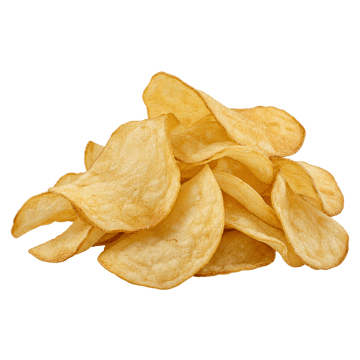
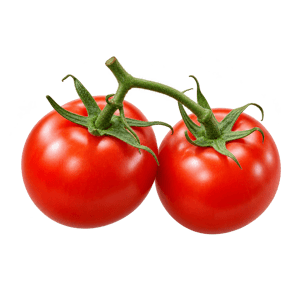
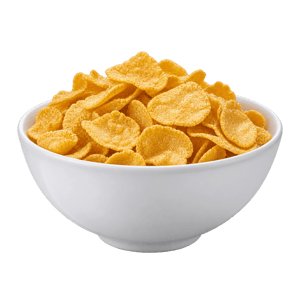
A tomato is group 1. Salt and a can make it group 3, because salt is a kitchen ingredient and food plus a kitchen ingredient is processed. Olive oil, garlic and basil keep the sauce in group 3. Ketchup crosses into group 4 because of one ingredient a kitchen doesn't keep, high-fructose corn syrup, with a flavoring beside it. The chip is built from parts: starch, a sugar made in a factory, a flavor enhancer, a color and a flavoring.
The labels are example lists written for this explorer, read by the same dictionary as the label checker. A can or a bag in your cupboard may list more or less. The nutrition line moves on its own: the group says how the food was made, not what it brings.
2 sources
- Monteiro CA, Cannon G, Levy RB, et al. Ultra-processed foods: what they are and how to identify them. Public Health Nutrition, 2019pmc.ncbi.nlm.nih.gov
- Gebhardt SE, Thomas RG. Nutritive Value of Foods. USDA ARS, Home and Garden Bulletin 72, 2002 (tomato, canned tomatoes, pasta sauce, catsup, corn chips)ars.usda.gov
More tools

For adults looking at what they eat. It explains how food is made and doesn't grade your food or diagnose anything.