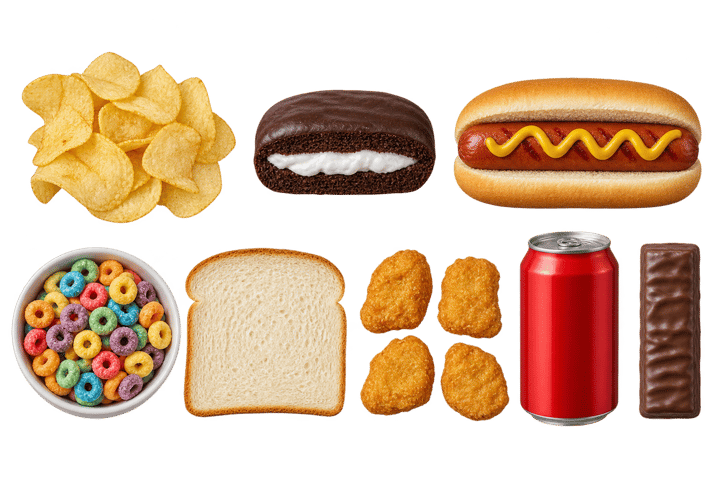
All processed food is bad for you
Short answerNo
On this page
No. Almost all food is processed in some way, and most processing is harmless or helpful. Frozen peas, dried pasta, plain yogurt, milk and rolled oats are NOVA group 1, and canned beans, canned fish and cheese are group 3. Only group 4, food with an ingredient a kitchen doesn’t keep, is what the research on ultra-processed food is about.
What we’d do
Buy frozen vegetables, canned beans and fish, dried pasta, oats and plain yogurt without a second thought. They’re fast, they keep, and they make it easier to cook a quick meal without reaching for the ultra-processed version. Save your attention for the group 4 staples you eat every day.
If you remember three things
- Freezing, drying, canning and fermenting are fine. NOVA lists them as minimal processes or as the way group 3 food is made.
- Processed (group 3) isn’t ultra-processed (group 4). Cheese and canned beans are processed. Cheese slices with emulsifying salts are ultra-processed.
- The pantry staples are your shortcut. A cup of canned kidney beans has 13 g of protein and 16.4 g of fiber.
Why people believe it
“Processed food” became shorthand for everything wrong with the modern diet. The headlines say processed food is linked to disease, the advice says eat whole food, and so anything that went through a factory starts to feel suspect. People feel guilty about the bag of frozen broccoli and the can of chickpeas, and some skip them for fresh food that goes bad in the fridge.
The research doesn’t say that. The studies people quote are about ultra-processed food, NOVA group 4, which is a much narrower category than “processed”.
A bookshelf and a printing press
Calling all processed food bad is like calling all printed books bad because some are junk. Printing is how the book got to you. Whether a book is any good depends on what’s inside. Freezing and canning are how a lot of good food gets to you in January.
What NOVA actually says
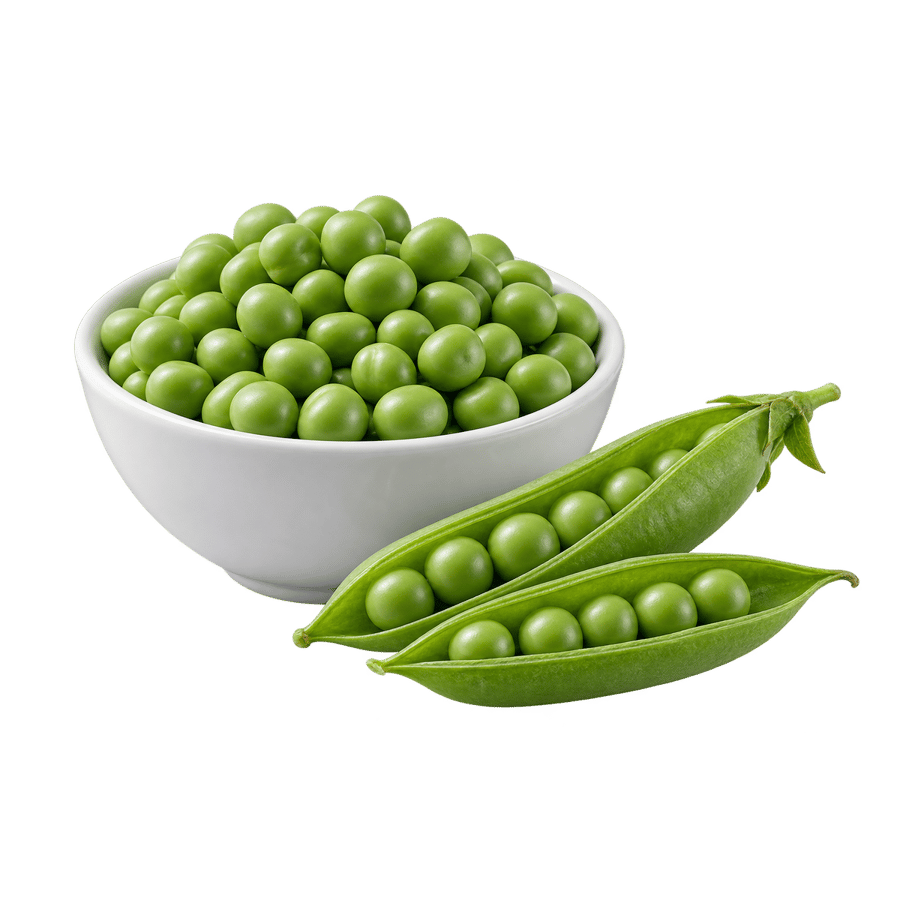
NOVA’s authors list the changes that leave a food in group 1, unprocessed or minimally processed. They are removing the parts you don’t eat, drying, crushing, grinding, fractioning, roasting, boiling, pasteurizing, refrigerating, freezing, putting it in a container, vacuum packing, and fermenting without alcohol. Their 2018 paper names frozen and dried fruit and vegetables, pasta made of flour and water, and plain yogurt with no added sugar or sweetener as group 1.
Group 3, processed food, is a group 1 food with a kitchen ingredient like salt, sugar or oil added. Canned vegetables, fruit and beans, canned fish, cheese, and bread of flour, water, salt and yeast all belong here.
Only group 4 needs an ingredient that a home kitchen doesn’t keep. That’s the group the trials and the big studies are about.
What the pantry gives you
These are some of the most useful foods in a kitchen, with their USDA numbers.
| Food | Group | Calories | Protein | Fiber |
|---|---|---|---|---|
| Frozen peas, 1 cup cooked | 1 | 125 | 8 g | 8.8 g |
| Canned kidney beans, 1 cup | 3 | 218 | 13 g | 16.4 g |
| Canned tuna, 3 oz | 3 | 99 | 22 g | 0 g |
| Dried whole wheat pasta, 1 cup cooked | 1 | 174 | 7 g | 6.3 g |
| Rolled oats, 1 cup cooked | 1 | 145 | 6 g | 4.0 g |
| Plain Greek yogurt, 1 container | 1 | 100 | 17 g | 0 g |
| Canned tomatoes, 1 cup | 3 | 46 | 2 g | 2.4 g |
None of these is ultra-processed, and between them you can make a weeknight dinner in the time it takes to heat a frozen meal.
The best case for the belief
Some processing does change nutrition, even inside group 1. Milling rice from brown to white takes most of its fiber away, 3.5 g a cup down to 0.6 g by the USDA’s figures, and both are still group 1. Canned foods can carry a lot of salt. A rule of “avoid processing” would at least push people toward brown rice and fresh vegetables.
But it would push them away from frozen and canned food too, which is one of the easiest ways to eat vegetables and beans all year. In a 2024 study, a menu of less processed food expired much faster than one of more processed food, a median of 35 days against 120, so fresh-only shopping also means more waste. The better rule is the one NOVA gives: check for an ingredient a kitchen doesn’t keep, and choose the whole grain and the low-sodium can when there’s a choice.
What to do
- Stock frozen vegetables and fruit, canned beans, canned fish, dried pasta, rice and oats.
- Check the label on sauced or seasoned versions, since a flavoring or a thickener can move them to group 4.
- If you watch your salt, pick canned food with no salt added.
- Spend the effort on swapping the group 4 foods you eat every day, using the swap ladder.
5 sources
- Monteiro et al., Ultra-processed foods: what they are and how to identify them, Public Health Nutrition, 2019pmc.ncbi.nlm.nih.gov
- Monteiro et al., The UN Decade of Nutrition, the NOVA food classification and the trouble with ultra-processing, Public Health Nutrition, 2018pmc.ncbi.nlm.nih.gov
- Gebhardt and Thomas, Nutritive Value of Foods, USDA Home and Garden Bulletin 72, 2002ars.usda.gov
- Hall et al., Ultra-processed diets cause excess calorie intake and weight gain: an inpatient randomized controlled trial of ad libitum food intake, Cell Metabolism, 2019pmc.ncbi.nlm.nih.gov
- Hess et al., Using less processed food to mimic a standard American diet does not improve nutrient value and may result in a shorter shelf life at a higher financial cost, Current Developments in Nutrition, 2024pmc.ncbi.nlm.nih.gov