Seed oils are ultra-processed
Short answerNot the way you think
On this page
Not by NOVA’s rules. Canola, soybean, corn and sunflower oil are group 2, kitchen ingredients, in the same group as olive oil and butter. The oils that mark a food as ultra-processed are hydrogenated and interesterified oils. Whether seed oils are good for your heart is a separate question about fat, which fats.guide covers.
What we’d do
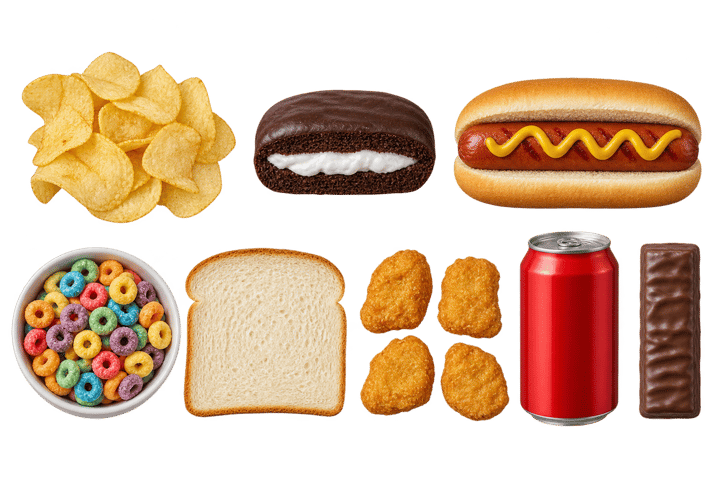
Cook with whichever oil you like and use the amount a recipe needs. Watch for the ultra-processed foods that seed oils often come inside, like chips, fried fast food and packaged baked goods, since those make people eat more whatever oil they’re made with. On a label, the word to look for is “hydrogenated”.
If you remember three things
- All cooking oils are kitchen ingredients. NOVA puts plant oils with sugar and salt in group 2.
- Hydrogenated oils are the marker. Fully hydrogenated oil on a label makes a food group 4.
- The food around the oil is the bigger issue. Chips, fried food and packaged baked goods are often group 4 for other reasons.
Why people believe it
Seed oils have a bad reputation online. They come out of large industrial plants, the process sounds nothing like pressing olives, and the oil shows up in nearly every packaged snack and fast food fryer. It seems to follow that the oil must be ultra-processed too.
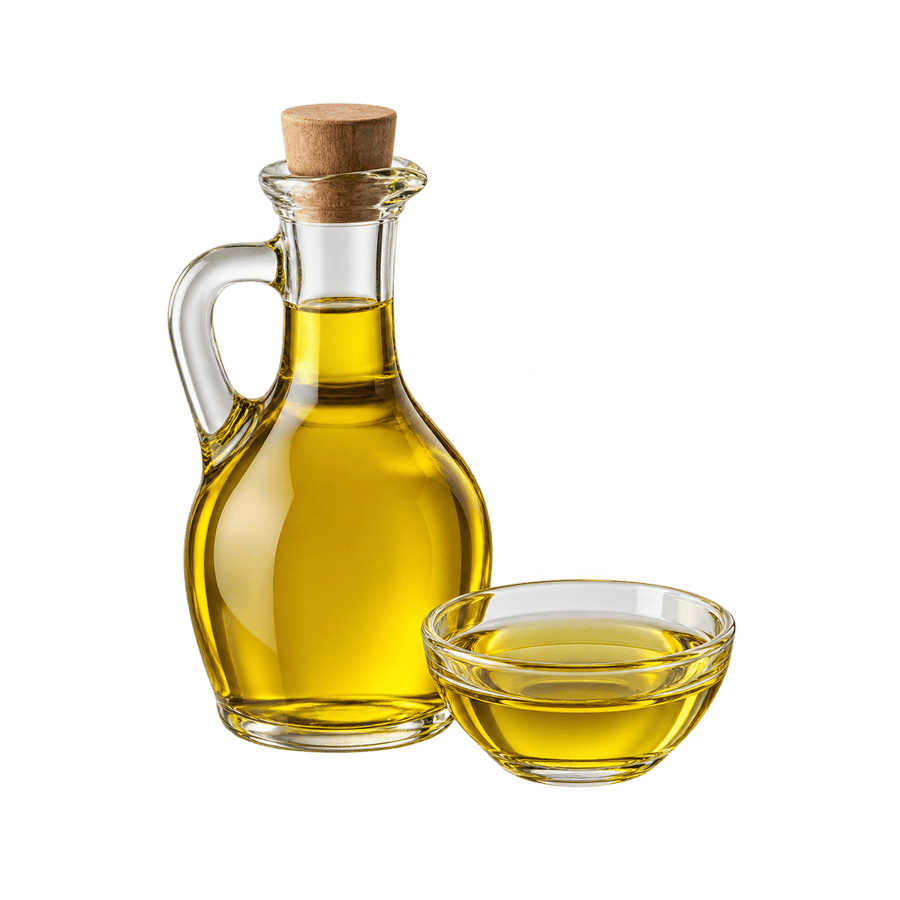
NOVA only asks whether a home kitchen would keep the ingredient. Plenty of people keep a bottle of canola oil next to the stove, so it’s a kitchen ingredient.
Flour and frozen pizza
A bag of flour comes out of a mill, and nobody calls flour ultra-processed. A frozen pizza made with that flour, plus a dough conditioner and a flavoring, is. Seed oil is the flour in this picture. The chips and the fried chicken sandwich it ends up in are the frozen pizza.
What NOVA says
NOVA’s 2019 guide puts oils and fats, sugar and salt in group 2, processed culinary ingredients, and says plant oils, sugar and salt, as used in cooking, aren’t ultra-processed. That covers olive, canola, soybean, corn, sunflower and peanut oil alike, and butter and lard.
The oils on NOVA’s list of group 4 markers are modified ones: hydrogenated oils and interesterified oils. Those are oils changed chemically, usually to make them solid or keep them from separating, and kitchens can’t make them.
Hydrogenated oils, then and now
Partially hydrogenated oils are where artificial trans fat came from. The FDA ruled in 2015 that they were no longer generally recognized as safe, companies mostly couldn’t add them to food after June 18, 2018, and the final compliance date was January 1, 2021. You shouldn’t see “partially hydrogenated” on a new US label.
Fully hydrogenated oil is a different ingredient, and you will still see it, for example in peanut butter made so the oil never separates, and it’s still a NOVA marker. A peanut butter of peanuts and salt is group 3, and the same peanut butter with fully hydrogenated oil is group 4. Two tablespoons of either have 190 calories and 8 g of protein by the USDA’s figures.
Where seed oil comes from in a real diet
A lot of seed oil reaches people inside chips, crackers, fried food and baked goods, foods that are often group 4 for other reasons, like a flavoring, an emulsifier or a modified starch. When people cut those foods and feel better, the oil gets the credit or the blame, though the food changed in many other ways at once.
That matches how the trials ran. In the 2025 England trial, both diets followed the same healthy eating guide, and people lost more weight on the minimally processed one. No single oil was being tested, only how processed the whole diet was.
The best case for the belief
Seed oil critics are right that making canola or soybean oil is far more industrial than pressing olives. The oils are extracted and refined at large scale, and the result is a pure fat with little left of the seed. If the question were “how far is this from the plant”, seed oils would rank high, and extra virgin olive oil low.
But NOVA isn’t measuring distance from the plant. Table sugar is also refined at scale, and it sits in group 2 for the same reason: it’s something you cook with at home. Whether seed oils raise or lower heart risk is a question about their fats, and that’s what fats.guide answers. LDL cholesterol is cholesterol.guide’s subject.
What to do
- Look for “hydrogenated” or “interesterified” in the ingredient list. Either one makes a food group 4.
- Cut the fried and packaged foods that carry most of the oil, using the swap ladder.
- At home, cook with the oil you like, in the amount the recipe needs.
4 sources
- Monteiro et al., Ultra-processed foods: what they are and how to identify them, Public Health Nutrition, 2019pmc.ncbi.nlm.nih.gov
- US Food and Drug Administration, Trans fat, checked 2026-11-14fda.gov
- Gebhardt and Thomas, Nutritive Value of Foods, USDA Home and Garden Bulletin 72, 2002ars.usda.gov
- Dicken et al., Ultraprocessed or minimally processed diets following healthy dietary guidelines on weight and cardiometabolic health: a randomized, crossover trial, Nature Medicine, 2025pmc.ncbi.nlm.nih.gov