Does ultra-processed food cause diabetes?
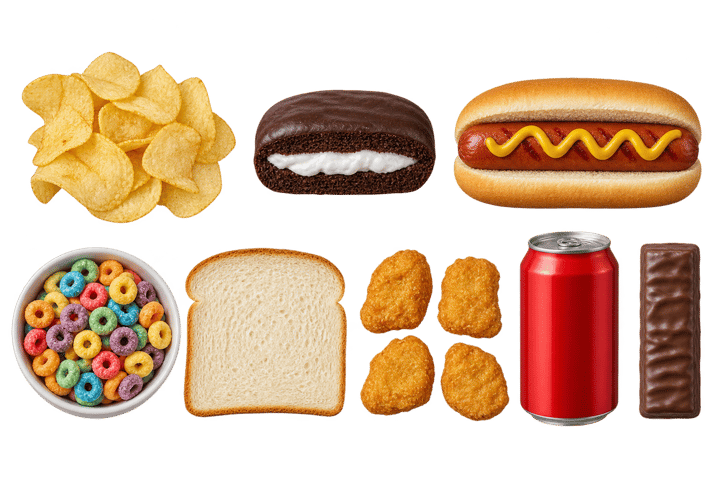
It goes with more type 2 diabetes, and that’s the best supported of all the health links. Across seven cohorts, each extra 10% of the diet from ultra-processed food went with about 12% more risk. But the foods inside the group point different ways. In 198,636 US adults, whole grain bread, breakfast cereal and yogurt, all ultra-processed, went with less diabetes, while sweet drinks, refined bread and processed meat went with more.
People with a high blood sugar result often hear two rules at once. One says cut everything from a package. The other says only sugar counts, so a diet soda and a protein bar are fine. The diabetes studies say something more specific than either, and it’s more useful.
We’d cut the sweet drinks first, diet ones included, then the refined bread and the processed meat, and keep the whole grain bread, the plain yogurt and the high-fiber cereal even though they’re group 4. If you’re in the prediabetes range, glucose.guide has the plan the prevention trials tested.
Asking whether ultra-processed food causes diabetes is a bit like asking whether restaurant food does. A salad and a milkshake both count, and the answer depends on what you order.
What the big studies found
In 2023 Chen and colleagues followed 198,636 nurses and other health workers in three US studies, for a total of about 5.2 million years of follow-up. 19,503 of them developed type 2 diabetes. The people who ate the most ultra-processed food, by its share of what they ate, had about 46% more risk than those who ate the least. When the team pooled their results with other cohorts, about 415,000 people in all, each extra 10% went with about 12% more risk.
A 2024 umbrella review in the BMJ found the same 12% and rated it moderate quality, one of only four results out of 45 that weren’t low or very low. Part of the link runs through weight. When the researchers in the US studies accounted for people’s starting weight, the gap between the highest and lowest eaters shrank, from 56% to 28% more risk on one measure.
The foods inside the group
| Went with more diabetes | Went with less diabetes |
|---|---|
| Refined breads | Dark and whole grain breads |
| Sweetened and diet drinks | Breakfast cereals |
| Sauces, spreads and condiments | Yogurt and dairy desserts |
| Animal products, like processed meat | Fruit-based products |
| Ready-to-eat mixed dishes | Packaged sweet and savory snacks |
Every food in this table is group 4. Part of the split may be the people, since someone who eats whole grain cereal every morning may live differently from someone who drinks soda every afternoon. Part of it is the food, since fiber and sugar don’t change with the label. That’s why this site never turns the group into a grade. Processing isn’t the same thing as nutrition has the rest.
What the trials add
No trial has run long enough to see who gets diabetes. The trials measure what comes before it. On the NIH ward in 2019, people ate 508 more calories a day on the ultra-processed menu and gained about 2 pounds in two weeks. In the 8-week England trial in 2025, people lost weight on both diets, and lost about twice as much on the minimally processed one. Extra calories day after day add up to weight, and in the US studies above, weight accounted for part of the link.
What we’d do
- Swap the drinks first. Water, sparkling water or unsweetened tea for soda and sweet tea. The 2026 US guidelines say to avoid sugar-sweetened drinks and limit low-calorie sweeteners.
- Keep added sugar low at each meal. The same guidelines say one meal should have no more than 10 grams.
- Swap refined bread for whole grain, and deli meat for chicken or fish you cook. The swap ladder has both with their fiber and protein.
- Keep the group 4 foods that went the other way, like plain yogurt and a high-fiber cereal, and judge them by their fiber and sugar.
- Test, don’t guess. If you haven’t had an A1c or a fasting glucose test, glucose.guide explains what the numbers mean.
5 sources
- Chen et al., Ultra-processed food consumption and risk of type 2 diabetes: three large prospective U.S. cohort studies, Diabetes Care, 2023pmc.ncbi.nlm.nih.gov
- Lane et al., Ultra-processed food exposure and adverse health outcomes: umbrella review of epidemiological meta-analyses, BMJ, 2024pmc.ncbi.nlm.nih.gov
- Hall et al., Ultra-processed diets cause excess calorie intake and weight gain: an inpatient randomized controlled trial of ad libitum food intake, Cell Metabolism, 2019pmc.ncbi.nlm.nih.gov
- Dicken et al., Ultraprocessed or minimally processed diets following healthy dietary guidelines on weight and cardiometabolic health: a randomized, crossover trial, Nature Medicine, 2025pmc.ncbi.nlm.nih.gov
- US Departments of Agriculture and Health and Human Services, Dietary Guidelines for Americans, 2025 to 2030, January 2026, p. 4cdn.realfood.gov