Does ultra-processed food cause depression?
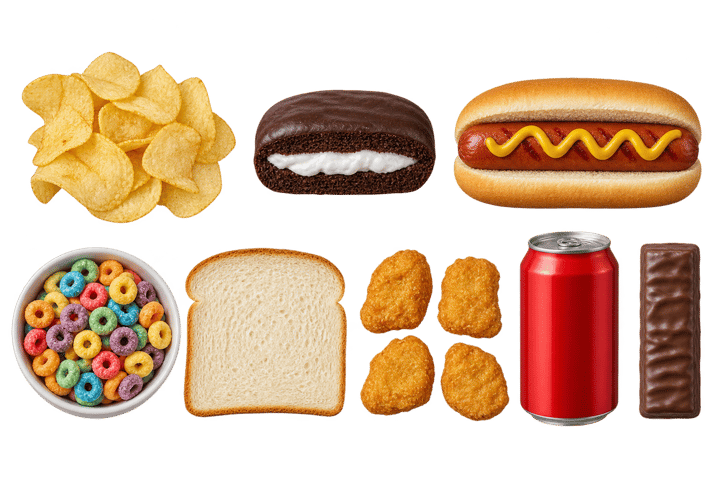
Nobody has shown that it causes depression, but the two keep turning up together. In about 31,000 US nurses followed for 14 years, the women who ate the most ultra-processed food were 34% to 49% more likely to develop depression than those who ate the least. A small trial found that a better diet, with far less junk food, helped people who were already depressed. Eat for your mood the way you’d eat for your heart, and treat depression itself with a doctor.
When a headline says a food is linked to depression, people tend to hear one of two things. Either the chips are making them sad, or the study is nonsense, since sad people reach for chips. Both can be partly true at once, and the studies so far can’t pull them apart.
We wouldn’t eat to treat depression, and we wouldn’t ignore food either. The changes that help a mood are the same ones that help everything else: more whole grains, fruit, vegetables, beans, fish and olive oil, and fewer sweet drinks, sweets and fast food. If you’re depressed, that’s something to do alongside treatment, never instead of it.
It’s a bit like noticing that people who sleep badly also drink more coffee. The coffee might make the sleep worse, the bad nights might lead to more coffee, or both. You’d need an experiment to know which.
What the big studies found
| Study | Who | What they found |
|---|---|---|
| Nurses’ Health Study II, 2023 | About 31,000 US women aged 42 to 62, followed 2003 to 2017 | Highest fifth of ultra-processed food intake: 49% more depression on a strict definition, 34% on a broad one. Artificially sweetened drinks and sweeteners stood out |
| BMJ umbrella review, 2024 | Pooled studies, about 9.9 million people across all its outcomes | 22% more depression in two cohorts. 48% more anxiety and 53% more common mental disorders, in studies that measured food and mood at the same time |
In the nurses’ study, the women who cut their ultra-processed food by three or more servings a day had a lower risk of depression than those whose intake stayed the same. The researchers called that analysis exploratory, and wrote that “the mechanism associating UPF to depression is unknown”.
The BMJ review rated its depression and anxiety results low quality. Most of these studies ask people what they eat and how they feel, sometimes in the same survey, so they can’t say which came first.
The trial that tested food
In 2017 Felice Jacka and her team ran a 12-week trial, called SMILES, in 67 adults with major depression. Half had seven sessions with a dietitian, who helped them eat more whole grains, vegetables, fruit, beans, fish, olive oil and dairy, and cut “extras” like sweets, refined cereals, fried food, fast food, processed meat and sweet drinks. Their extras fell by about 22 servings a week. The other half had social support visits instead.
By the end, 32% of the diet group were in remission, against 8% of the support group. It was a small trial, people knew which group they were in, and the diet changed many things at once, so it can’t tell you whether cutting ultra-processed food was the part that worked.
What we’d do
- Treat depression first. Talk to a doctor about low mood that doesn’t lift. If you’re thinking about hurting yourself, call or text 988 in the US. It’s free and open around the clock.
- Change the plate as well. The swap ladder starts with the drinks and snacks, the same kind of extras the trial cut.
- Go easy on diet drinks. They stood out in the nurses’ study, and the 2026 US guidelines already say to limit low-calorie sweeteners. Are diet drinks ultra-processed? has the swaps.
- Keep the rest of the evidence in view. Is ultra-processed food really that bad? puts the mood studies next to the trials on eating and weight.
5 sources
- Samuthpongtorn et al., Consumption of ultraprocessed food and risk of depression, JAMA Network Open, 2023pmc.ncbi.nlm.nih.gov
- Lane et al., Ultra-processed food exposure and adverse health outcomes: umbrella review of epidemiological meta-analyses, BMJ, 2024pmc.ncbi.nlm.nih.gov
- Jacka et al., A randomised controlled trial of dietary improvement for adults with major depression (the SMILES trial), BMC Medicine, 2017pmc.ncbi.nlm.nih.gov
- US Departments of Agriculture and Health and Human Services, Dietary Guidelines for Americans, 2025 to 2030, January 2026, p. 4cdn.realfood.gov
- 988 Suicide and Crisis Lifeline988lifeline.org