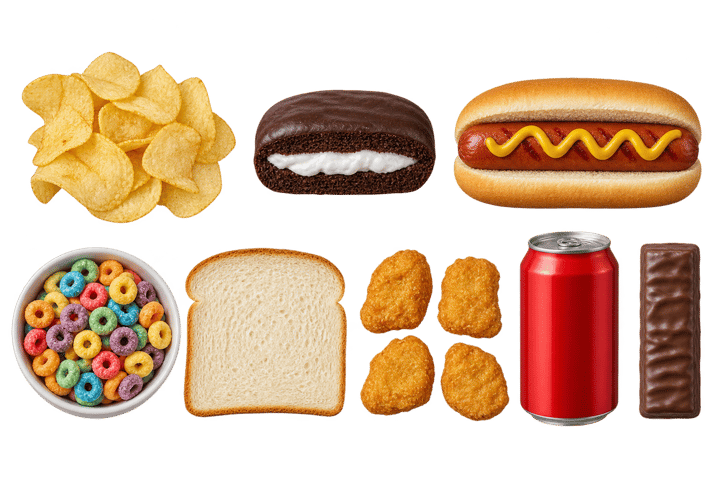
Additives: which ones have evidence in people
On this page
Only a few additives have been tested in people, and the results are small and early. In an 11-day trial, the emulsifier carboxymethylcellulose changed gut bacteria in healthy adults. Sweeteners have FDA limits far above what people eat. The US guidelines say to limit artificial flavors, petroleum-based dyes, artificial preservatives and low-calorie sweeteners.
What we’d do
Don’t chase single additives through the store. Eat less of the foods built from them, since those foods make people eat more, and cutting them cuts the additives at the same time. If you want to go one step further, swap the diet soda for sparkling water and make your own salad dressing, which removes the sweeteners, colors, flavors and gums you’d otherwise get every day.
If you remember three things
- Emulsifiers have the most interesting early evidence. One trial of 16 people and one French study of 95,442 adults, and neither settles it.
- Sweeteners are far under their safety limits. A 132 lb person would need about 75 packets of aspartame a day to reach the FDA’s limit.
- A scary name isn’t evidence. Ascorbic acid is vitamin C, and “natural flavor” is still a group 4 marker.
Why people fear additives
A long ingredient list full of names you can’t pronounce looks like a warning. Some additives have scary stories behind them, from lab studies in mice or from one viral post, and it feels safest to avoid all of them.
The trouble is that “additive” covers hundreds of substances that do very different jobs, from vitamin C to food dye. Fearing all of them means ignoring the few that have human evidence, and worrying about many that don’t.
What additives are for
NOVA calls the additives that mark group 4 cosmetic additives. Its authors say they’re designed to make the final product palatable or more appealing. Flavors and flavor enhancers change the taste, and colors change the look. Emulsifiers keep oil and water mixed, thickeners and gums give body to food that has little of its own, and sweeteners add sweetness without sugar’s calories.
Preservatives, which keep food from spoiling, are a separate case. NOVA says they can be used in processed foods as well as ultra-processed ones, so a preservative alone doesn’t make a food group 4.
Emulsifiers
An emulsifier is anything that lets oil and water stay mixed. Egg yolk does it in homemade mayonnaise. In packaged food the common ones are soy lecithin, mono- and diglycerides, polysorbate 80 and carboxymethylcellulose (also called cellulose gum).

Earlier work in mice suggested some emulsifiers can upset gut bacteria. In 2022 Benoit Chassaing’s team tested one in people. Sixteen healthy adults ate a fully controlled diet with no emulsifiers for 11 days. Seven of them also got 15 grams a day of carboxymethylcellulose mixed into their food, and the other nine didn’t.
The people on the emulsifier had a little more stomach discomfort after meals. Their gut bacteria became less varied, and their stool had fewer short-chain fatty acids, compounds gut bacteria make from fiber. In two of the seven, bacteria had moved into the inner layer of mucus that normally keeps them away from the gut wall, which is a feature of gut inflammation.
A year later, a French team followed 95,442 adults for a median of 7.4 years and estimated how much of each emulsifier they ate. People who ate more of the cellulose group (E460 to E468) had slightly more cardiovascular disease, a 5% higher risk for each step up in intake. Mono- and diglycerides (E471 and E472) went with higher risk of every outcome they measured, including heart disease and stroke.
Both studies are early. The trial was tiny and short. The French study followed real diets, but people who eat more emulsifiers eat more ultra-processed food in general, and the per-step effects were small. It’s an interesting lead, and nobody has shown yet that the emulsifiers in a normal diet cause disease.
Sweeteners
The FDA sets an acceptable daily intake for each sweetener it allows, the amount it considers safe to eat every day for life.
| Sweetener | Acceptable daily intake (per kg of body weight) | Packets a day for a 132 lb (60 kg) person to reach it |
|---|---|---|
| Aspartame | 50 mg | about 75 |
| Saccharin | 15 mg | about 45 |
| Steviol glycosides (stevia) | 4 mg, as steviol | about 27 |
| Acesulfame potassium | 15 mg | about 23 |
| Sucralose | 5 mg | about 23 |
The FDA counts a packet as about as sweet as two teaspoons of sugar.
In 2023 the World Health Organization’s cancer agency called aspartame possibly carcinogenic. The FDA disagreed, saying the studies behind that call had significant shortcomings, and it says its scientists don’t have safety concerns when aspartame is used under the approved conditions.
The 2025 to 2030 US Dietary Guidelines say to limit low-calorie sweeteners anyway, and to avoid sugar-sweetened drinks. A diet soda has no calories to count, but it’s group 4 because of its sweetener, color and flavors. Are diet drinks ultra-processed? covers what to swap them for.
Colors, flavors and gums
The Dietary Guidelines name artificial flavors and petroleum-based dyes, like Red 40 and Yellow 5, as things to limit. They give no amount.
“Natural flavor” sounds safer than “artificial flavor”, and in NOVA’s test they’re the same. Both are flavorings, so either one makes a food group 4. What does “natural flavors” mean? explains where they come from.
Gums like xanthan, guar and gellan, and carrageenan from red seaweed, thicken food and keep it from separating. The USDA allows carrageenan, xanthan gum and one form of gellan gum in organic food. Is carrageenan bad for you? has the evidence on the one people ask about most.
Why a chemical-sounding name is a poor test
Ascorbic acid is vitamin C. Lecithin is in every egg yolk. Meanwhile “natural flavor” and “cane sugar” sound like a farm stand, and the first is a group 4 marker. The length or strangeness of a name tells you nothing about what it does or whether it’s been tested. The useful questions are whether it’s on NOVA’s list, and whether any study in people found a problem at the amounts people eat.
The best case for blaming the additives
The authors of the 2025 Lancet series list “potentially harmful” classes and mixtures of food additives among the ways ultra-processed food could hurt health, alongside overeating and nutrient gaps. The emulsifier trial shows a real change in the gut in just 11 days. And additives are the one feature of ultra-processed food that whole food never has, so if processing itself does harm beyond the nutrients, additives are a natural suspect.
The case on the other side is the size of what’s already explained. On the NIH ward, people ate 508 more calories a day on ultra-processed meals, and ate them 17 calories a minute faster. That alone is enough to explain weight gain over time, with no additive needed. Nobody knows yet how much additives add on top of eating more, and no long trial has tested the additives in a normal diet.
We think the additives are a reasonable worry and a weak reason to fear any single food. The foods they come in are the bigger target.
The easiest places to cut them
- Diet soda. Sparkling water has no sweetener, color or flavoring.
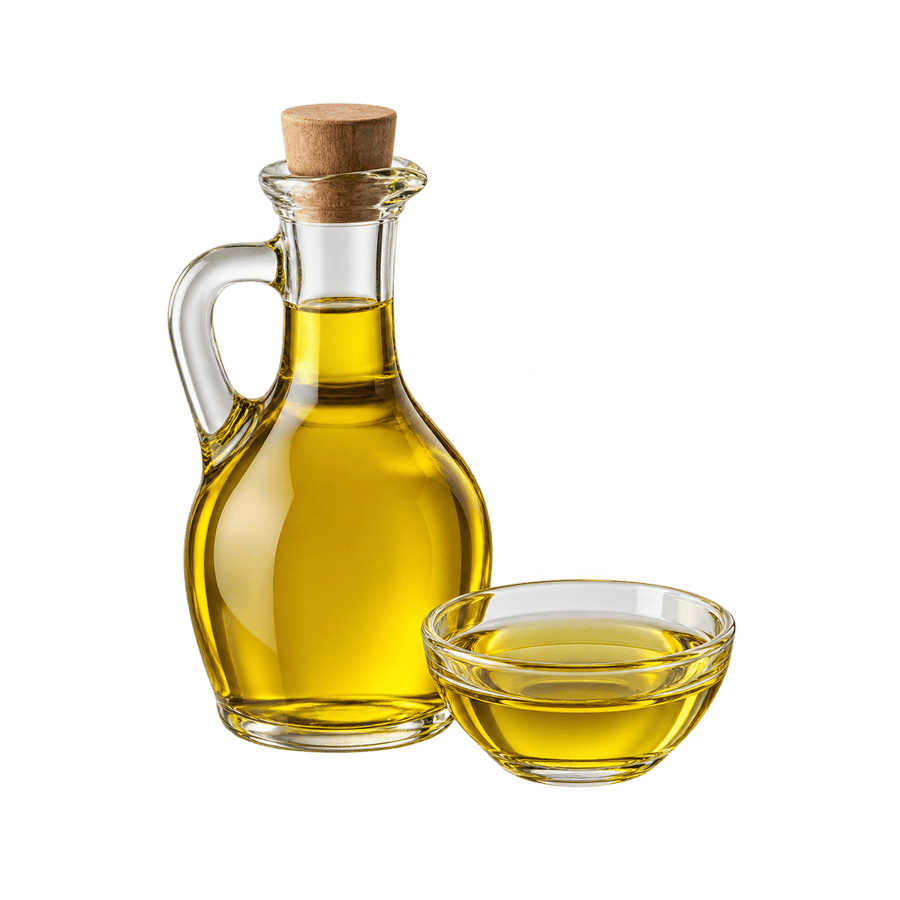
- Salad dressing. A big salad with chicken and bottled Italian dressing is 290 calories, 48% of them ultra-processed. Make the dressing with a spoon of olive oil and vinegar and the share goes to 0%.
- Flavored yogurt. Plain yogurt with fruit you add yourself has no flavoring or thickener.
- Flavored snacks. Air-popped popcorn, nuts and fruit.
The label checker lights up every additive class in your own label, and the swap ladder shows the version of each staple without them.
8 sources
- Chassaing et al., Randomized controlled-feeding study of dietary emulsifier carboxymethylcellulose reveals detrimental impacts on the gut microbiota and metabolome, Gastroenterology, 2022pmc.ncbi.nlm.nih.gov
- Sellem et al., Food additive emulsifiers and risk of cardiovascular disease in the NutriNet-Santé cohort: prospective cohort study, BMJ, 2023pmc.ncbi.nlm.nih.gov
- US Food and Drug Administration, Aspartame and other sweeteners in food, checked 2026-11-14fda.gov
- US Departments of Agriculture and Health and Human Services, Dietary Guidelines for Americans, 2025 to 2030cdn.realfood.gov
- Monteiro et al., Ultra-processed foods: what they are and how to identify them, Public Health Nutrition, 2019pmc.ncbi.nlm.nih.gov
- Monteiro et al., Ultra-processed foods and human health: the main thesis and the evidence, The Lancet, 2025pubmed.ncbi.nlm.nih.gov
- Hall et al., Ultra-processed diets cause excess calorie intake and weight gain: an inpatient randomized controlled trial of ad libitum food intake, Cell Metabolism, 2019pmc.ncbi.nlm.nih.gov
- 7 CFR 205.605, Nonagricultural substances allowed as ingredients in or on processed products labeled as organic, eCFR, checked 2026-11-14ecfr.gov