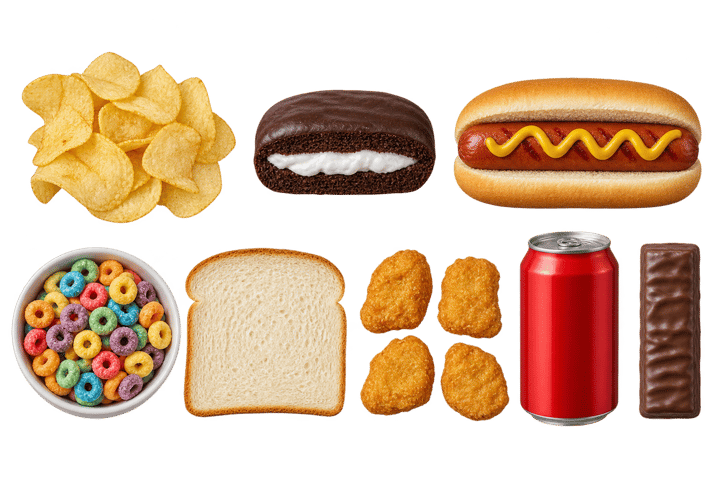
Is eating less ultra-processed food more expensive?
Often a bit, yes. On the NIH research ward in 2019, the ingredients for a week of the unprocessed menu cost $151 against $106 for the ultra-processed one, at 2,000 calories a day. A 2024 USDA study of two American-style menus found the less processed one cost more and spoiled sooner. Which swaps you pick decides how much of that gap you pay.
The two sides argue past each other. One says real food is a luxury, so telling people to cut ultra-processed food is telling them to spend money they don’t have. The other says beans and oats are dirt cheap, so cost is an excuse. Both have a point. In the studies, ultra-processed menus cost less and kept longer. But the plainest staples aren’t fancy food, and they’re where a budget swap starts.
We’d spend on the swaps that change the most and save on the rest. Rolled oats in place of boxed cereal, beans, frozen vegetables and eggs are the swaps we’d make first on a budget. The pricier ones, like bakery bread, are the ones to pick and choose. A loaf of packaged whole wheat is a fine place to save money, since it brings the fiber.
What the studies found
| Study | Menus | Cost |
|---|---|---|
| NIH ward, 2019 | Ultra-processed and unprocessed, matched for calories, sugar, fat, fiber and salt on offer | $106 a week against $151, for 2,000 calories a day, the study’s own estimate from one supermarket chain |
| USDA menu study, 2024 | A standard American menu, and a copy built from less processed foods to match it | $9.85 a day against $15.91 per person |
The 2024 study found something else too. The less processed menu wasn’t any healthier, since both copied a poor American diet, and its foods expired much sooner, a median of 35 days against 120. Food that keeps longer gets thrown out less, so shelf life is part of the cost.
The 2024 menus were made to be equally poor on purpose. A cheaper, healthier swap list doesn’t have to copy the same meals, and that’s where the staples come in.
Swaps to try first on a budget
These are all group 1 or 3 in NOVA, and every one replaces a group 4 food people buy every week:
| Instead of | Try | Group |
|---|---|---|
| Boxed breakfast cereal | Rolled oats | 1 |
| Fruit yogurt cups | A big tub of plain yogurt | 1 |
| Frozen meals | Dried pasta with jarred tomato sauce | 1 and 3 |
| Sauced frozen vegetables | Plain frozen vegetables | 1 |
| Soda | Tap or sparkling water | 1 |
What we’d do
- Start with the budget swaps above, and check your receipt after a month.
- Keep packaged whole wheat bread if bakery bread doesn’t fit your budget.
- See the myth that eating less ultra-processed food costs a lot more.
3 sources
- Hall et al., Ultra-processed diets cause excess calorie intake and weight gain: an inpatient randomized controlled trial of ad libitum food intake, Cell Metabolism, 2019pmc.ncbi.nlm.nih.gov
- Hess et al., Using less processed food to mimic a standard American diet does not improve nutrient value and may result in a shorter shelf life at a higher financial cost, Current Developments in Nutrition, 2024pubmed.ncbi.nlm.nih.gov
- Monteiro et al., NOVA. The star shines bright, World Nutrition, 2016worldnutritionjournal.org