
Croissant
NOVA puts croissant in group 4, ultra-processed, since most versions list mono- and diglycerides or natural flavor.
What puts it in group 4
Most US versions list mono- and diglycerides or natural flavor, an emulsifier. One ingredient a home kitchen doesn't keep is enough to put a food in group 4.
On packaged croissants. A bakery one of flour, butter, water, yeast, sugar and salt may have none, so check yours.
The label in your hand decides, since brands differ. Paste its ingredients in the label checker to find the ingredient that puts it in group 4.
The real-food swap
 Croissant 1 croissant, 231 ultra-processed cal
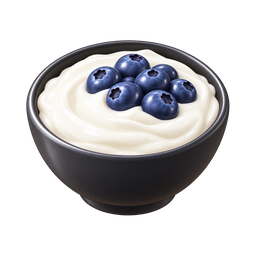 Greek yogurt and berries 140 cal, 0 ultra-processed
Swap the croissant for Greek yogurt and berries.
Protein 5 g to 18 g, fiber 1.5 g to 2 g, added sugar 6 g to 0 g.
Check it on a whole plate or swap your whole day.
What's in a serving
- Calories
- 231 in 1 croissant
- Protein
- 5 g
- Fiber
- 1.5 g
- Added sugar
- 6.4 g
- Sodium
- 219 mg
- Protein5 g 10% DV
- Fiber1.5 g 5% DV
- Added sugar6.4 g 13% of the day's limit
Vitamins and minerals
- Selenium13 mcg 24% DV
- Folate74 mcg 19% DV
- Thiamin (B1)0.22 mg 18% DV
- Vitamin A106 mcg 12% DV
- Riboflavin (B2)0.14 mg 11% DV
- Niacin (B3)1.2 mg 7% DV
- Iron1.2 mg 7% DV
- Zinc0.43 mg 4% DV
- Vitamin B120.09 mcg 4% DV
- Vitamin E0.48 mg 3% DV
- Magnesium9.1 mg 2% DV
- Vitamin B60.03 mg 2% DV
- Calcium21 mg 2% DV
- Potassium67 mg 1% DV
- Vitamin K1 mcg under 1% DV
- Sodium219 mg 10% of the day's limit
A serving is 1 croissant (57 g), the measure in the USDA's Nutritive Value of Foods (item 571). Added sugar is sugar a maker or cook adds, so fruit, milk and plain foods count none. Vitamins, minerals and sodium are from USDA FoodData Central, record 174987, as a share of the FDA Daily Value. A bar past 20% is high by the FDA's own word.
 Easily log it with a photo in Food XRAY to see how it fits your day's targets.